Basic Korean Phrases
Quick answer
The most useful basic Korean phrases are 안녕하세요 (annyeonghaseyo, hello), 감사합니다 (gamsahamnida, thank you), 네 (ne, yes), 아니요 (aniyo, no), and 죄송합니다 (joesonghamnida, sorry / excuse me). These polite forms are safe in almost any situation.
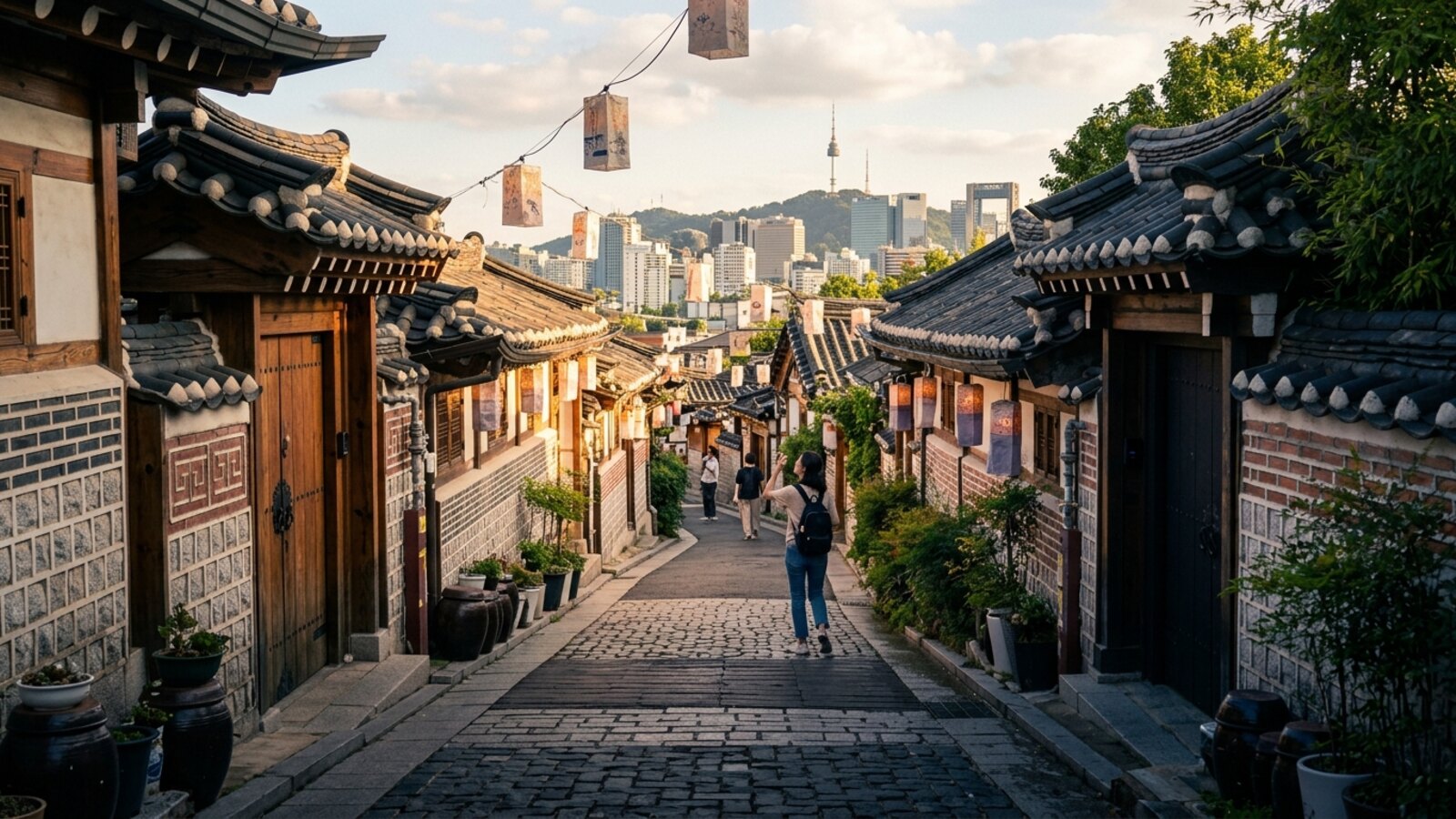
Korean for Tourists - Essential Travel Phrases
Master essential Korean vocabulary and phrases for tourists. Learn greetings, food ordering, directions, and basic conversations for your Korea travel.
134 cards with native audio. Read them all free on the deck page.
See every card in this deckPro
Study this deck with Pro
Every card with native-speaker audio and a built-in spaced-repetition study system, plus every other deck on the site.
That is $3.33 a month, billed yearly.
Secure checkout by Stripe. Yearly plan starts with a free trial; cancel anytime.
- Every language and subject, all decks
- Native audio on every card
- Spaced-repetition study with progress tracking
- iPhone app Premium included: unlimited own-phrase cards and custom subjects
- Cancel anytime from your account
Essential Korean phrases
| Korean | Pronunciation | Meaning | Listen |
|---|---|---|---|
| 안녕하세요 | an-nyeong-ha-se-yo | Hello | |
| 안녕히 가세요 | an-nyeong-hi ga-se-yo | Goodbye (to someone leaving) | |
| 감사합니다 | gam-sa-ham-ni-da | Thank you | |
| 죄송합니다 | joe-song-ham-ni-da | Sorry / Excuse me | |
| 네 | ne | Yes / I see / Okay | |
| 아니요 | a-ni-yo | No |
Handy phrases for getting around
Add 주세요 (juseyo, 'please give') after a noun to ask for it politely: 물 주세요 (mul juseyo) means 'water, please'.
| Korean | Pronunciation | Meaning | Listen |
|---|---|---|---|
| 얼마예요? | eol-ma-ye-yo | How much is it? | |
| 화장실이 어디예요? | hwa-jang-si-ri eo-di-ye-yo | Where is the restroom? | |
| 이거 주세요 | i-geo ju-se-yo | I'll take this one, please | |
| 도와주세요 | do-wa-ju-se-yo | Please help me | |
| 영어 할 수 있어요? | yeong-eo hal su i-sseo-yo | Do you speak English? |
Frequently asked questions
How do you say hello in Korean?
안녕하세요 (annyeonghaseyo). It literally means 'are you at peace?' and is the standard polite greeting for any time of day.
What is the polite way to say thank you in Korean?
감사합니다 (gamsahamnida) is the standard polite form. 고맙습니다 (gomapseumnida) is also polite and a little warmer.
Do I need to learn Hangul first?
You can start speaking with romanized phrases, but Hangul (the Korean alphabet) is designed to be learned in a day or two and makes everything easier to read and pronounce.
Is Korean hard to pronounce for English speakers?
Korean sounds are fairly consistent once you know Hangul. The romanizations here get you close; native audio is the fastest way to sound natural.
Keep learning Korean
More free guides and decks to get you speaking.