Korean Flashcards
Ready-made Korean flashcard decks with text-to-speech audio and a built-in spaced-repetition study system. No Anki. Read every card free; one Pro plan opens study with audio on every set.
All Korean flashcard sets
Pick the set that fits your goal. Read every card free; Pro unlocks study with audio on all of them.

Learn Korean Fast - Master Essential Words and Phrases for Quick Fluency
Master Korean fast with 200 essential flashcards covering Hangul basics, survival words, phrases, food vocabulary, and sentence patterns with Seoul pronunciation guides.

Practical Korean - Intermediate Conversation Skills
Build practical Korean conversation skills for short-term visitors. Learn market negotiations, daily interactions, and cultural phrases beyond tourist basics.

Advanced Korean - Cultural Integration & Family Conversations
Master advanced Korean for cultural integration and family relationships. Learn respectful expressions, community interactions, and authentic conversational phrases.

Korean for Tourists - Essential Travel Phrases
Master essential Korean vocabulary and phrases for tourists. Learn greetings, food ordering, directions, and basic conversations for your Korea travel.

Korean for Kids - First 100 Essential Words
Essential Korean vocabulary for children. Learn family, animals, colors, food, and everyday words with simple examples and pronunciation guides.

Korean Food Vocabulary - Fruits and Vegetables
Learn Korean names for common fruits and vegetables. Perfect for market shopping, cooking, and healthy eating conversations in Korean.

Korean Animal Vocabulary for Kids
Fun Korean flashcards featuring common animals. Learn pets, farm animals, and wildlife vocabulary with child-friendly examples.
Korean Pronunciation - Master Korean Sounds
Learn Korean pronunciation with clear examples and mouth position guides. Perfect your Korean accent and speaking confidence with Hangul.
Korean Polite and Casual Speech
Teaches everyday Korean messages at the formal, polite and casual speech levels, with a note on who each level is for. Covers greetings, titles, thanks, apologies, refusals and how to agree to speak casually.

Korean Romantic Phrases for Dating
Teaches 32 Korean phrases for dating, from the first talk and texting a partner to meeting their parents at the formal level. Each card shows when a phrase is casual and only for a partner.
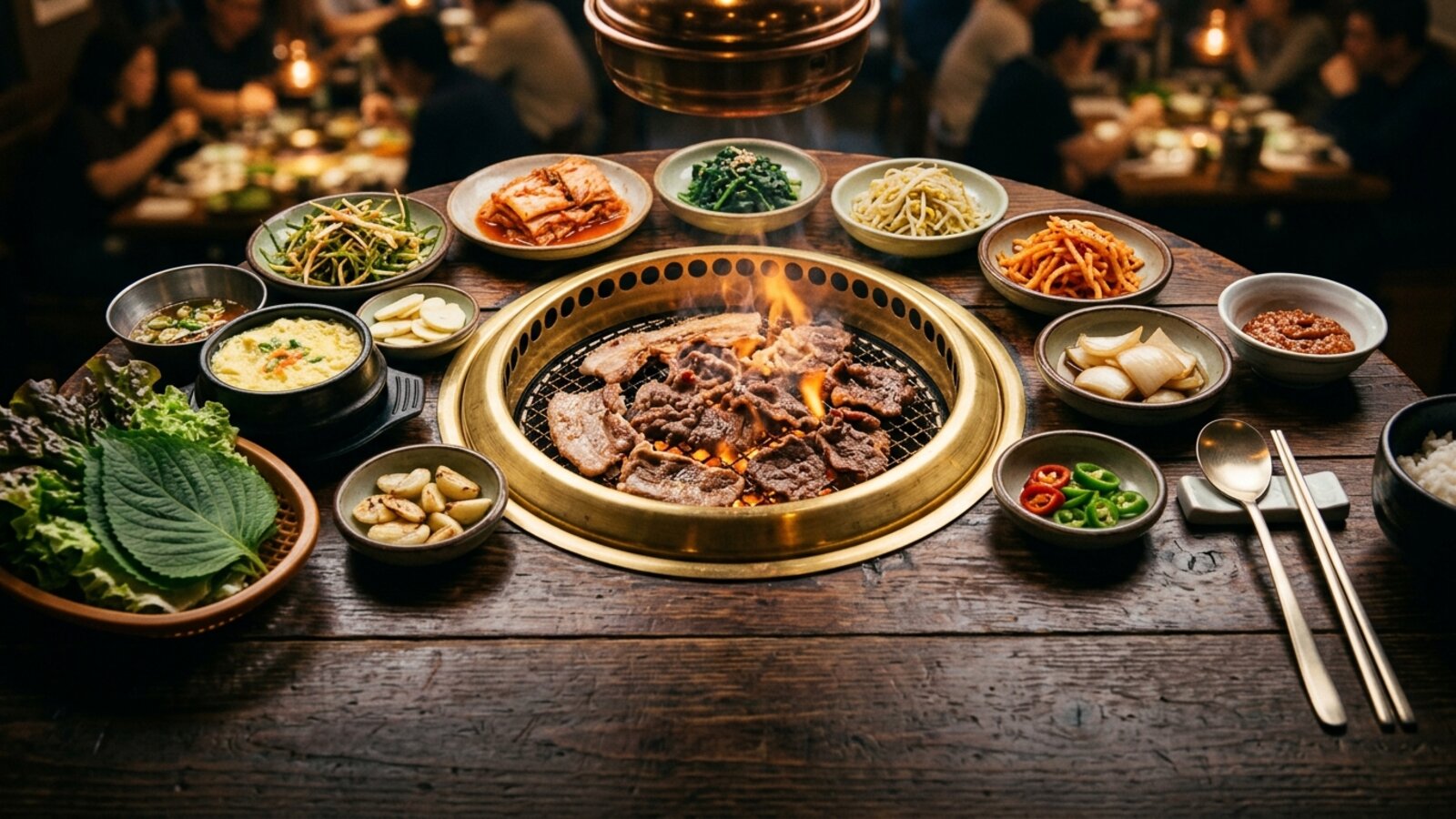
Korean Phrases for Ordering Food and BBQ
Teaches the Korean phrases for ordering food at a restaurant, Korean BBQ and a cafe, from saying how many people to paying and leaving. Includes what staff say back, so you recognize it.

Korean Taxi and Subway Phrases
Teaches the Korean phrases for taking a taxi and the subway in Korea, from hailing a cab and giving the destination to paying and finding the right line and exit. Includes what drivers and train announcements say, so you recognize it.

Korean Sound Change Rules
Teaches the Korean pronunciation rules that make spoken Korean sound different from its spelling: linking, nasalization, tensing, aspiration, liquidization, ㅎ drop and palatalization. Each card is an everyday word with its pronounced form in Hangul and romanization.

Korean Colors - Basic Color Vocabulary
Master Korean color vocabulary with simple examples. Essential for descriptions, shopping, and everyday Korean conversations.

Korean Weather and Seasons Vocabulary
Learn Korean weather and seasonal vocabulary. Perfect for daily conversations about climate, temperature, and seasonal activities.
Which Korean set should you start with?
The decks are organised by why you are learning, not by level. Start with the row that matches yours.
| You are | Start with | Add next | Why this order |
|---|---|---|---|
| Going on a trip | Korean for Tourists | Korean Pronunciation | Travel Korean is a small set of fixed exchanges. Learned whole, they work from the first day. |
| Staying a few months | Practical Korean | Learn Korean Fast | Daily life needs bargaining, appointments and small talk that the tourist set does not reach. |
| Living there or joining a family | Advanced Korean - Cultural Integration | Practical Korean | Speech level is the thing Korean judges you on, and it is a family and workplace problem before it is a grammar one. |
| Starting from zero | Learn Korean Fast | Korean Pronunciation | The 200-word core includes Hangul basics and the verbs every later set assumes. |
| Teaching a child | Korean for Kids | Animals, Colors, Food, Weather | Themed sets are short enough to finish, which is what keeps a young learner coming back. |
| Reading Hangul but not being understood | Korean Pronunciation | any set above | Korean consonants come in plain, tense and aspirated versions that English treats as one sound. |
What to expect when you start Korean
Hangul is the good news, and it is a genuine advantage over Japanese or Chinese. It is a designed alphabet of 24 basic letters assembled into syllable blocks, the shapes are built from the mouth positions that make the sounds, and most learners can read it aloud within a few hours. Do this first: everything afterwards is easier when you are reading Korean rather than romanisation.
Word order is the first real adjustment. Korean puts the verb at the end, so the English habit of front-loading the action has to go. Small particles mark which noun is the subject and which is the object, which is what lets the order move around at all.
Speech levels are what Korean actually judges you on. The same sentence has formal, polite and casual forms, and the choice depends on who you are speaking to rather than what you are saying. Using casual speech with someone older is not a small slip. The advanced set exists because this is a social problem, not a vocabulary one.
Pronunciation holds people back longer than they expect. Korean distinguishes plain, tense and aspirated consonants where English hears one sound, and final consonants change depending on what follows. Both are things you can hear long before you can explain them, which is why every card is voiced.
Why these Korean flashcards
Audio on every card
Every card plays Google text-to-speech audio, so you hear each word as well as read the romanization.
No Anki, no setup
Study right here in your browser or on mobile. Nothing to install or configure.
One plan, every deck
Pro covers every language and subject here and in the iPhone app. Cancel anytime.
Preview the flashcards
A free sample drawn from across the Korean sets — hear every card in the full deck.
- ㅏ/ a /
- Vowel 'a' - sounds like 'ah' in 'father'
- 입어 봐도 될까요?/ i-beo bwa-do doel-kka-yo? /
- May I try it on?
- 마음 편히 가지세요./ ma-eum pyeon-hi ga-ji-se-yo /
- Please set your mind at ease.
- 아니요/ a-ni-yo /
- No
- 입/ ip /
- mouth
- 바나나/ ba-na-na /
- banana
- 펭귄/ penggwin /
- penguin
- ㄴ/ n /
- Like 'n' in 'nose'.
- 실례지만 혹시 나이가 어떻게 되세요?/ sillyejiman hoksi naiga eotteoke doeseyo /
- Excuse me, but may I ask how old you are? 혹시 (by any chance) softens the question. Age helps decide which speech level to use, so it is a normal question in Korea when asked this way. Some people ask the birth year instead: 몇 년생이세요? (myeon nyeonsaengiseyo).
- 더 알아가고 싶어요/ deo aragago sipeoyo /
- I'd like to get to know you better. Polite, safe for someone you just met.
- 몇 분이세요?/ myeot buniseyo /
- How many people? Staff ask this as you walk in. Answer with the number and 명이요.
- 택시/ taeksi /
- Taxi. The word comes from English and is said with a Korean sound: taek-si.
Frequently asked questions
Do these Korean flashcards include audio?
Yes. Every card plays Google text-to-speech audio in a Korean voice from Google's Neural2 tier, so you hear each word as well as read the romanization.
Do I need to know Hangul to use these?
No. Cards show Hangul with a romanized pronunciation and English meaning, so you can start right away and pick up Hangul as you go.
Do I need Anki or a subscription?
No Anki. The decks and the study system run in your browser and on mobile. Reading every card is free; study mode with audio is part of SubjectCards Pro, one plan for every language and subject.
Which Korean deck should I start with?
Beginners and travelers should start with the Korean travel phrases set; Learn Korean Fast covers core words and essential phrases.
Keep learning Korean
More free guides and decks to get you speaking.
- Basic Korean Phrases
- Korean Greetings People Actually Use
- Korean Phrases for Travel
- Korean Numbers 1 to 100
- 200 Common Korean Phrases
- Korean Honorifics: Polite and Casual Phrases
- Korean Romantic Phrases for Dating and Texting
- How to Order Food in Korean, BBQ and Cafe
- Korean Pronunciation Rules: 7 Sound Changes
- Taxi in Korean, Plus Subway Phrases
- Browse all Korean sets