Japanese Food Vocabulary: Fruits, Vegetables & Everyday Foods
Quick answer
The most useful everyday Japanese food words are ご飯 (gohan, cooked rice — also the general word for a meal), 魚 (sakana, fish), 肉 (niku, meat), 卵 (tamago, egg), and パン (pan, bread). Fruit and vegetable names are a mix of native words like りんご (ringo, apple) and にんじん (ninjin, carrot), and katakana loanwords like バナナ (banana) and トマト (tomato).
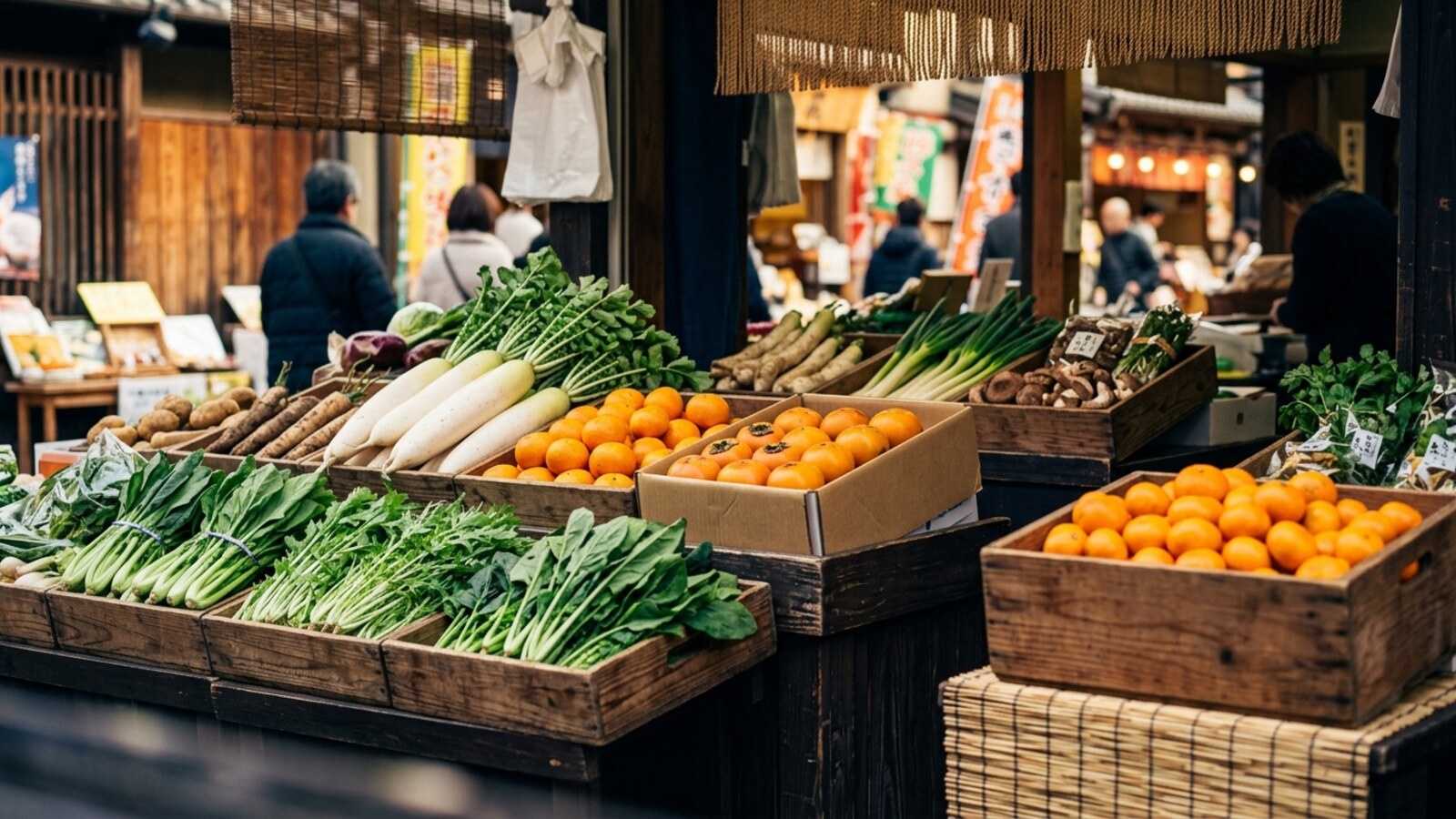
Japanese Food Vocabulary - Fruits and Vegetables
Everyday Japanese food words — common fruits, vegetables, and staple foods — each with natural Japanese script, Hepburn romaji, an example sentence, and native-speaker audio.
30 cards with native audio. Read them all free on the deck page.
See every card in this deckPro
Study this deck with Pro
Every card with native-speaker audio and a built-in spaced-repetition study system, plus every other deck on the site.
That is $3.33 a month, billed yearly.
Secure checkout by Stripe. Yearly plan starts with a free trial; cancel anytime.
- Every language and subject, all decks
- Native audio on every card
- Spaced-repetition study with progress tracking
- iPhone app Premium included: unlimited own-phrase cards and custom subjects
- Cancel anytime from your account
Fruits in Japanese
Everyday fruit names. Note the katakana loanwords (banana, melon, lemon, orange) borrowed from English.
| Japanese | Pronunciation | Meaning | Listen |
|---|---|---|---|
| りんご | ringo | Apple | |
| バナナ | banana | Banana | |
| みかん | mikan | Mandarin orange | |
| いちご | ichigo | Strawberry | |
| ぶどう | budō | Grapes | |
| もも | momo | Peach | |
| すいか | suika | Watermelon | |
| メロン | meron | Melon | |
| なし | nashi | Japanese pear | |
| レモン | remon | Lemon | |
| オレンジ | orenji | Orange | |
| パイナップル | painappuru | Pineapple |
Vegetables in Japanese
Common vegetables, including ones central to Japanese cooking like daikon and negi.
| Japanese | Pronunciation | Meaning | Listen |
|---|---|---|---|
| にんじん | ninjin | Carrot | |
| じゃがいも | jagaimo | Potato | |
| たまねぎ | tamanegi | Onion | |
| トマト | tomato | Tomato | |
| キャベツ | kyabetsu | Cabbage | |
| きゅうり | kyūri | Cucumber | |
| なす | nasu | Eggplant | |
| だいこん | daikon | Daikon radish | |
| ねぎ | negi | Green onion | |
| ほうれんそう | hōrensō | Spinach | |
| とうもろこし | tōmorokoshi | Corn | |
| ピーマン | pīman | Green bell pepper |
Everyday food staples
The staple words you will hear at every meal — including gohan, which means both cooked rice and meal.
| Japanese | Pronunciation | Meaning | Listen |
|---|---|---|---|
| ご飯 | gohan | Cooked rice / meal | |
| パン | pan | Bread | |
| 魚 | sakana | Fish | |
| 肉 | niku | Meat | |
| 卵 | tamago | Egg | |
| 牛乳 | gyūnyū | Milk |
Frequently asked questions
What does gohan mean in Japanese?
Gohan literally means cooked rice, but because rice is the center of a traditional meal, it also means meal in general: asagohan is breakfast, hirugohan is lunch, and bangohan is dinner.
Why are some Japanese food words written in katakana?
Katakana marks loanwords from other languages. Foods that arrived from abroad, such as banana, tomato, melon, lemon, and pan (bread, from Portuguese), keep their borrowed names and are written in katakana.
What is the difference between mikan and orenji?
A mikan is the small, easy-to-peel Japanese mandarin orange, everywhere in winter. Orenji is the loanword for the larger Western orange. They are different fruits with different words.
What Japanese vegetables have no simple English name?
Daikon is a large mild white radish, negi is the long Japanese green onion, and nashi is the crisp, round Japanese pear. English usually just borrows the Japanese words.
Keep learning Japanese
More free guides and decks to get you speaking.