Colors in Spanish
Quick answer
The basic colors in Spanish are rojo (red), azul (blue), verde (green), amarillo (yellow), and negro (black). Spanish colors are adjectives, so they usually come after the noun — la casa roja (the red house) — and most change their ending to match the noun's gender and number.
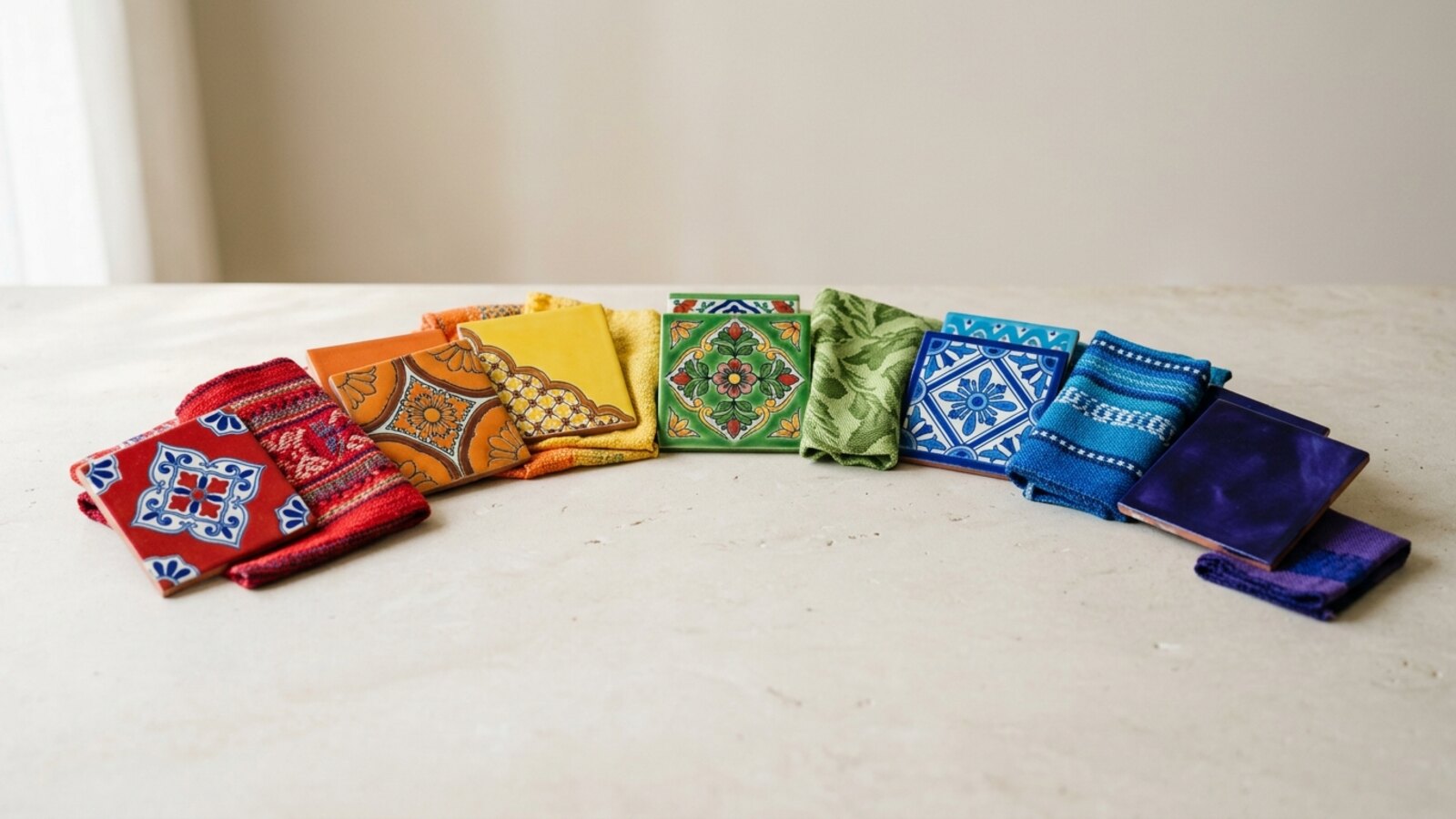
Spanish Colors - Basic Color Vocabulary
Master Spanish color vocabulary with simple examples. Essential for descriptions, shopping, and everyday Spanish conversations.
20 cards with native audio. Read them all free on the deck page.
See every card in this deckPro
Study this deck with Pro
Every card with native-speaker audio and a built-in spaced-repetition study system, plus every other deck on the site.
That is $3.33 a month, billed yearly.
Secure checkout by Stripe. Yearly plan starts with a free trial; cancel anytime.
- Every language and subject, all decks
- Native audio on every card
- Spaced-repetition study with progress tracking
- iPhone app Premium included: unlimited own-phrase cards and custom subjects
- Cancel anytime from your account
The basic colors in Spanish
| Spanish | Pronunciation | Meaning | Listen |
|---|---|---|---|
| rojo | ROH-hoh | red | |
| azul | ah-SOOL | blue | |
| verde | BEHR-deh | green | |
| amarillo | ah-mah-REE-yoh | yellow | |
| negro | NEH-groh | black | |
| blanco | BLAHN-koh | white | |
| naranja | nah-RAHN-hah | orange | |
| rosa | ROH-sah | pink | |
| morado | moh-RAH-doh | purple | |
| gris | grees | gray | |
| marrón | mah-RROHN | brown |
Shades and other useful color words
Add claro (light) or oscuro (dark) after a color to shade it: azul claro (light blue), verde oscuro (dark green).
| Spanish | Pronunciation | Meaning | Listen |
|---|---|---|---|
| café | kah-FEH | brown (common in Latin America) | |
| dorado | doh-RAH-doh | gold | |
| plateado | plah-teh-AH-doh | silver | |
| claro | KLAH-roh | light (e.g. azul claro) | |
| oscuro | ohs-KOO-roh | dark (e.g. verde oscuro) |
Frequently asked questions
How do you say red in Spanish?
Red is rojo (ROH-hoh). For a feminine noun it becomes roja — una manzana roja (a red apple).
Do Spanish colors change with gender?
Most do. Colors ending in -o change to -a for feminine nouns and add -s for plurals: rojo, roja, rojos, rojas. Colors ending in -e or a consonant (verde, azul, gris) only change for plural: verdes, azules.
Where do colors go in a Spanish sentence?
After the noun, unlike English. 'The red car' is el coche rojo — literally 'the car red'.
How do you ask what color something is in Spanish?
Say ¿De qué color es? (deh keh koh-LOR ess), meaning 'What color is it?'
Why don't rosa and naranja change for gender?
Because they come from nouns (a rose, an orange). Color words derived from nouns stay the same: flores rosa (pink flowers), not flores rosas.
Keep learning Spanish
More free guides and decks to get you speaking.