Kitchen Spanish: 32 Words and Phrases for Cooks
Kitchen Spanish starts with words like el sartén (el sar-TEN, the frying pan), picar (pee-KAR, to chop) and caliente (kah-LYEN-teh, hot). Below are 32 cards: 17 words for utensils, ingredients and cooking verbs, then 15 phrases cooks say on a shift, grouped from moving on the line to cleaning up. Latin American usage comes first, and the cards note where Spain differs.
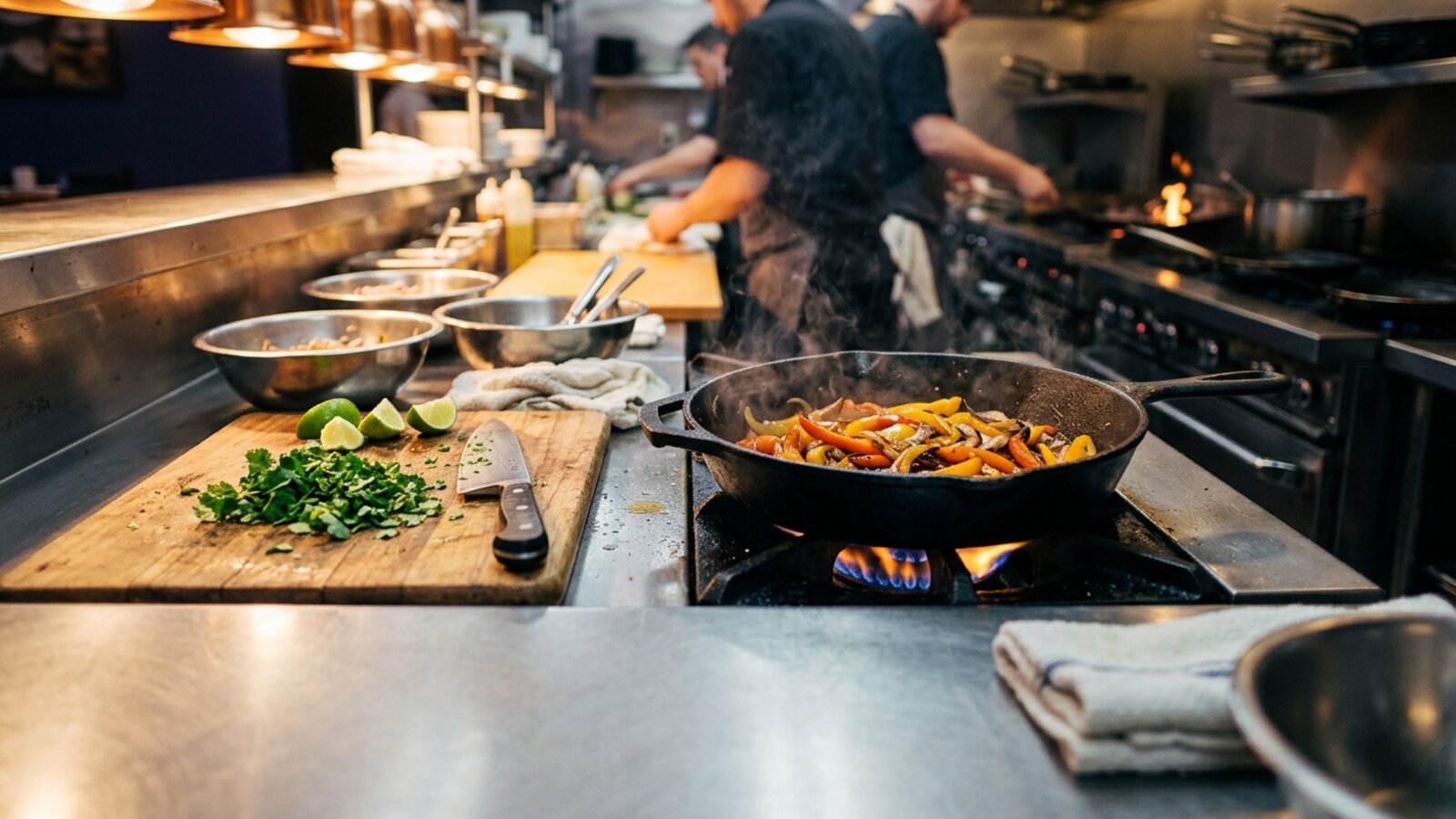
Kitchen Spanish Words and Phrases
Teaches the Spanish words and phrases cooks use at work: utensils, ingredients, cooking verbs and the calls you hear on a shift. Latin American usage is the default, with Spain differences noted.
32 cards with audio. Read them all free on the deck page.
See every card in this deckPro
Study this deck with Pro
Every card with text-to-speech audio and a built-in spaced-repetition study system, plus every other deck on the site.
That is $3.33 a month, billed yearly.
Secure checkout by Stripe. Yearly plan starts with a free trial; cancel anytime.
- Every language and subject, all decks
- Text-to-speech audio on every card
- Spaced-repetition study with progress tracking
- iPhone app Premium included: unlimited own-phrase cards and custom subjects
- Cancel anytime from your account
Hear every phrase, not just three
The list below stays free. Pro adds text-to-speech audio on all 32 phrases, an example sentence per card, and a review schedule that brings each one back before you forget it.
Secure checkout by Stripe. Yearly plan starts with a free trial; cancel anytime.
Utensils and Equipment
| Spanish | Pronunciation | Meaning | Listen |
|---|---|---|---|
| el sartén | el sar-TEN | The frying pan. In Mexico most cooks say el sartén. Dictionaries and Spain make it feminine: la sartén. Both are understood. | |
| la olla | lah OH-yah | The pot, for soup, beans or anything you boil. A big stockpot is also la olla. | |
| el cuchillo | el koo-CHEE-yoh | The knife. To sharpen a knife is afilar el cuchillo. | |
| la tabla de picar | lah TAH-blah deh pee-KAR | The cutting board. On a busy line people usually just say la tabla. In Spain you will more often hear la tabla de cortar. Both are understood everywhere. | |
| el cucharón | el koo-chah-RON | The ladle, for soup, sauce and beans. | |
| la estufa | lah es-TOO-fah | The stove, with the burners. This is Latin American usage. In Spain the stove is la cocina or los fogones, and una estufa is a space heater. | |
| la plancha | lah PLAHN-chah | The flat-top griddle on a restaurant line. Also used in Spain, where a la plancha means cooked on the griddle. |
Ingredients
| Spanish | Pronunciation | Meaning | Listen |
|---|---|---|---|
| la cebolla | lah seh-BOH-yah (Spain: theh-BOH-yah) | The onion. Cebolla picada is chopped onion. | |
| el ajo | el AH-hoh | The garlic. One clove is un diente de ajo. | |
| el jitomate | el hee-toh-MAH-teh | The tomato. In central Mexico the red tomato is el jitomate, and el tomate often means the green tomatillo. In most other countries and in Spain, el tomate is the red one. |
Cooking Verbs
| Spanish | Pronunciation | Meaning | Listen |
|---|---|---|---|
| cortar | kor-TAR | To cut. The general word for cutting anything. | |
| picar | pee-KAR | To chop or dice into small pieces. In Mexico, pica also means it is spicy. | |
| freír | freh-EER | To fry. Fried is frito, as in papas fritas (fries). | |
| hervir | ehr-BEER | To boil. Boiling is hirviendo. | |
| asar | ah-SAR | To grill or roast. Carne asada (grilled beef) comes from this verb. | |
| pelar | peh-LAR | To peel. Potatoes are papas in Latin America and patatas in Spain. | |
| voltear | bol-teh-AR | To flip or turn over. This is Latin American usage. In Spain people usually say dar la vuelta. |
Moving on the Line
| Spanish | Pronunciation | Meaning | Listen |
|---|---|---|---|
| ¡Atrás! | ah-TRAHS | Behind you. Say it loud when you walk behind someone on the line. You will also hear ¡Detrás! In many US kitchens people also just say behind in English. | |
| ¡Caliente! | kah-LYEN-teh | Hot. Call it out when you carry a hot pan, pot or plate past people. | |
| ¡Permiso! | pehr-MEE-soh | Excuse me, coming through. The polite way to pass someone in Mexico and Central America. Con permiso is the full form. | |
| ¡Cuidado, el piso está mojado! | kwee-DAH-doh, el PEE-soh es-TAH moh-HAH-doh | Careful, the floor is wet. In Spain the floor is usually el suelo. |
Asking for What You Need
| Spanish | Pronunciation | Meaning | Listen |
|---|---|---|---|
| Necesito más cebolla picada. | neh-seh-SEE-toh mahs seh-BOH-yah pee-KAH-dah | I need more chopped onion. Swap in any item: necesito más ajo, necesito más platos. | |
| ¿Me pasas las pinzas? | meh PAH-sahs lahs PEEN-sahs | Can you pass me the tongs? Las pinzas are tongs. Cooks on a line use tú with each other. To a manager or an older coworker, ¿Me pasa las pinzas? is more polite. | |
| ¿Dónde lo pongo? | DON-deh loh PON-goh | Where do I put it? Use la for a feminine thing, as in ¿Dónde la pongo? for la olla. | |
| Se acabó el pollo. | seh ah-kah-BOH el POH-yoh | We're out of chicken. This is what the kitchen says when an item is 86'd. Ya no hay pollo means the same. |
Timing and Ready
| Spanish | Pronunciation | Meaning | Listen |
|---|---|---|---|
| ¿Cuánto le falta? | KWAN-toh leh FAHL-tah | How much longer does it need? Ask this about a dish or an order. | |
| Faltan cinco minutos. | FAHL-tahn SEEN-koh mee-NOO-tohs | A cook's reply: five more minutes. Change the number as needed: faltan dos minutos. | |
| Ya casi. | yah KAH-see | A cook's reply: almost. It is nearly done. Ya casi está is the longer form. | |
| Ya está listo. | yah es-TAH LEES-toh | It's ready. Use lista for a feminine word: la orden ya está lista. You will also hear ¡Listo! on its own. | |
| Ponlo a fuego lento. | PON-loh ah FWEH-goh LEN-toh | Put it on low heat. High heat is a fuego alto, medium is a fuego medio. Ponlo is the casual tú form. The usted form is póngalo. |
Cleaning Up
| Spanish | Pronunciation | Meaning | Listen |
|---|---|---|---|
| Limpia esta estación. | LEEM-pyah ES-tah es-tah-SYON | Clean this station. A cook or manager says this before a break or at close. Between coworkers, tú is normal. The usted form is limpie esta estación. Some kitchens say el área. | |
| Lava los trastes, por favor. | LAH-bah lohs TRAHS-tehs, por fah-BOR | Wash the dishes, please. Los trastes is the everyday word in Mexico. Elsewhere you will hear los platos, and in Spain friega los platos. |
Frequently asked questions
Is kitchen Spanish different in Mexico and Spain?
The cooking verbs are mostly the same. Some words change. The stove is la estufa in Mexico and la cocina or los fogones in Spain. Potatoes are papas in Latin America and patatas in Spain. These cards follow Latin American usage and note Spain where it differs.
Should I use tú or usted with coworkers in a kitchen?
Cooks on the same line usually use tú with each other. Use usted with a manager, an older coworker or someone you just met, until they use tú with you.
How do you say behind you in Spanish in a kitchen?
Say atrás, loud and clear, as you pass. You may also hear detrás or permiso. In many US kitchens people also use the English word behind.
Keep learning Spanish
More free guides and decks to get you speaking.