Number Flashcards for Kids
Ready-made number flashcards for early math: the numerals 0 to 20 plus counting by tens to 100, each with its name, a simple counting example, and native audio. A built-in spaced-repetition system schedules the reviews so number recognition and counting stick. No printing. Read every card free; one Pro plan opens study with audio on every deck.
All Numbers flashcard sets
Pick the set that fits your goal. Read every card free; Pro unlocks study with native audio on all of them.
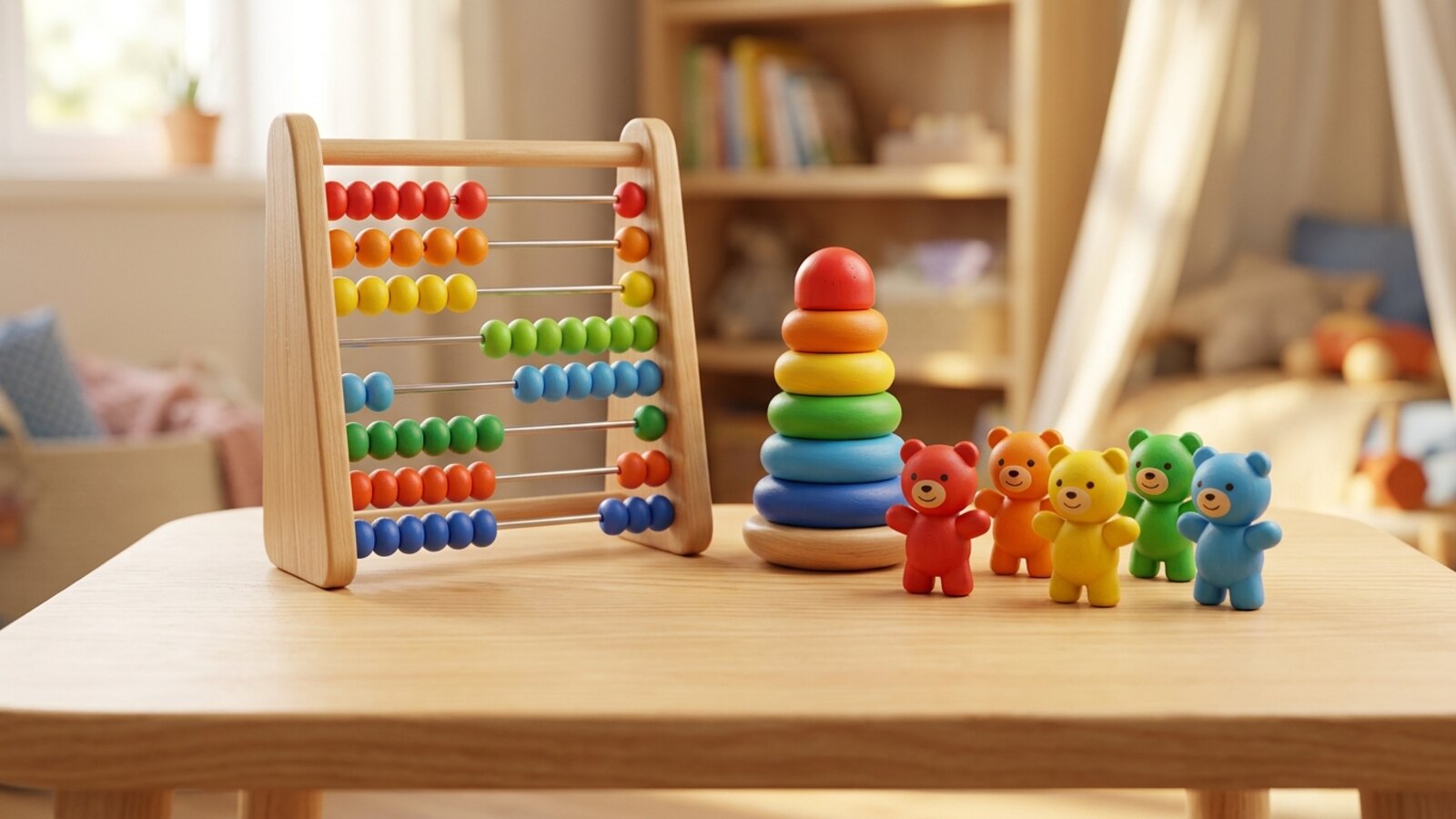
The three stages of learning numbers, and which one is hard
Counting to 100 is not one skill. It is three, and the middle one is where nearly every child slows down.
| Stage | Covers | What a child is learning | Difficulty |
|---|---|---|---|
| 0 to 10 | The first eleven numerals and names | That the numeral, the word, and that many things are the same idea | Steady. Mostly repetition. |
| 11 to 20 | The teens | Names that do not announce their own structure | The hard part. Expect this stage to take the longest. |
| Tens to 100 | 20, 30, 40 and on to 100 | That the pattern repeats, so counting is a system rather than a list | Easier than the teens once the pattern is seen. |
Why the teens are the sticking point
English is unhelpful here. Eleven and twelve give no hint that they mean ten and one and ten and two, so they simply have to be memorised. Thirteen through nineteen do contain their parts, but in reverse: thirteen says three before ten, while twenty-three says the twenty first. A child who has just worked out the pattern in the twenties finds the teens contradict it.
Languages that name these numbers regularly, saying the equivalent of ten-one and ten-two, produce children who count further sooner. That is a fact about English rather than about the child, so a stall in the teens is expected rather than a warning sign.
Counting is also not the same as knowing how many. A child can recite to twenty and still not answer how many are on the table, because reciting the sequence and understanding that the last number names the size of the group are separate steps. Counting real objects and stopping to ask how many bridges them.
Once the tens are in place the system opens up. Sixty, seventy and eighty are transparently six, seven and eight tens, so a child who sees that stops learning numbers one at a time and starts generating them. That is the point at which counting to a hundred goes from memory work to something obvious.
Why these Numbers flashcards
Native-speaker audio
Hear the correct pronunciation on every card, not just a romanization.
No Anki, no setup
Study right here in your browser or on mobile. Nothing to install or configure.
One plan, every deck
Pro covers every language and subject here and in the iPhone app. Cancel anytime.
Preview the flashcards
A free sample drawn from across the Numbers sets — hear every card with native audio in the full deck.
- 0/ zero /
- The number zero. It means none at all, nothing to count.
- 2/ two /
- The number two. It comes after one and before three.
- 4/ four /
- The number four. It comes after three and before five.
- 7/ seven /
- The number seven. It comes after six and before eight.
- 9/ nine /
- The number nine. It comes after eight and before ten.
- 12/ twelve /
- The number twelve. It is ten and two more, and comes after eleven.
- 14/ fourteen /
- The number fourteen. It is ten and four more, and comes after thirteen.
- 16/ sixteen /
- The number sixteen. It is ten and six more, and comes after fifteen.
- 19/ nineteen /
- The number nineteen. It is ten and nine more, and comes after eighteen.
- 30/ thirty /
- The number thirty, written 30. It is three tens.
- 60/ sixty /
- The number sixty, written 60. It is six tens.
- 80/ eighty /
- The number eighty, written 80. It is eight tens.
Frequently asked questions
What do the number flashcards cover?
Recognizing and naming the numerals 0 through 20, counting objects up to twenty, and counting by tens up to one hundred, each with audio and a simple example.
What age are number flashcards for?
They suit preschool and kindergarten children learning to recognize numerals and count, usually ages 3 to 6.
Do the number cards include audio?
Yes. Each card has audio so your child hears the number said correctly, with spaced repetition built in. It runs in the browser and on mobile.
Keep learning Numbers
More free guides and decks to get you speaking.